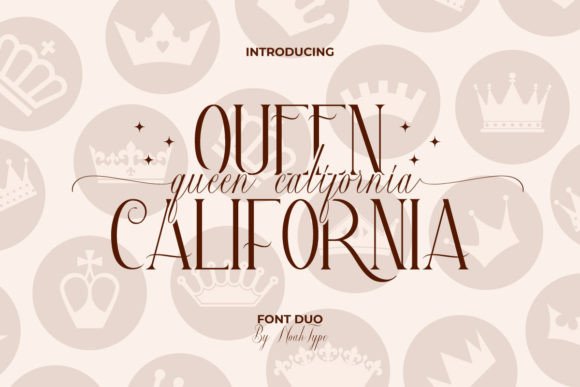
Queen California: The Font Duo That Balances Luxury and Personality
Understanding the Dual Nature of Queen California
In the world of design, finding a typeface that bridges the gap between high-end luxury and human warmth can be a challenge. Too often, serif fonts feel cold and corporate, while script fonts can look messy or informal. Queen California solves this by offering a curated font duo that harmonizes these two distinct styles. It pairs a structured, luxury serif display with a flowing handwriting calligraphy script. This combination allows you to create layouts that feel both polished and personal, which is a rare quality in modern typography.
The visual personality of Queen California is defined by contrast and cohesion. The serif component brings structure, authority, and a classic editorial feel. It features clean lines and high-contrast strokes that command attention without shouting. On the other hand, the script component offers an organic, fluid aesthetic that mimics natural handwriting. When used together, they create a visual hierarchy that guides the viewer’s eye effortlessly. You get the readability of a serif with the emotional impact of a script, making it a versatile addition to any designer's toolkit.
Practical Applications: Where This Font Truly Shines
When you are working on branding materials, consistency is key. Queen California allows you to maintain a unified look across different mediums. For a small business owner, you might use the serif style for your main logo wordmark to establish trust, and then use the script style for taglines or product packaging to add a human touch. This duality helps build a brand identity that feels complete. It works exceptionally well for lifestyle brands, boutique agencies, and high-end retail where the customer experience is paramount.
In the realm of publishing and editorial design, this font duo is incredibly effective. Imagine a magazine spread or a blog header where the headline uses the bold serif style, and the subheadings or pull quotes utilize the elegant script. This approach creates a natural visual rhythm that keeps readers engaged. It avoids the monotony of using a single typeface family throughout a layout. Because Queen California is designed to be a display font, it is optimized for large sizes, ensuring that the details of the letterforms remain crisp and legible even at scale.
For digital creators and social media managers, Queen California offers a solution to the "content fatigue" problem. Social media graphics need to stop the scroll, and typography plays a massive role in that. Using the handwritten calligraphy style for quotes or announcements can make digital content feel more intimate and less like an advertisement. Conversely, using the serif style for announcements gives them weight and importance. This flexibility means you can switch up your visual style while staying strictly within your brand guidelines.
Design Strategy and Readability Considerations
One of the most significant advantages of Queen California is its PUA encoding. For those who aren't deep into technical typography, this simply means that accessing all the special characters, glyphs, and swashes does not require advanced design software or extra licensing steps. Whether you are using a professional suite like Adobe Illustrator or a simple online editor like Canva, you can access the full range of decorative elements. This democratizes high-end design, allowing hobbyists and entrepreneurs to achieve a professional look without a steep learning curve.
However, practical application requires a bit of restraint. While the script style is beautiful, it is best used for short bursts of text. Think headers, logos, and invitations rather than body copy. If you try to write a full paragraph in the calligraphy style, readability will drop significantly, especially on mobile screens. The serif style, while more readable, is still a display font. It is perfect for headlines, but for long-form reading like blog posts or articles, you will want to pair it with a clean sans-serif or a standard serif font for the body text.
When evaluating if Queen California is the right fit for your project, consider the mood you want to evoke. If your project requires a sterile, hyper-minimalist tech look, this might not be the right choice. It thrives in environments that value elegance, creativity, and a personal touch. Wedding invitations, for example, are a classic use case where this font excels. The combination of the serif for the names and the script for the details creates a timeless, romantic aesthetic that standard fonts simply cannot replicate.
Maximizing Your Investment in Premium Typography
Choosing a premium font is an investment in your project's quality. Unlike free fonts that often come with limited character sets or licensing restrictions, Queen California provides a comprehensive package. When you download it, take the time to explore the full character map. You will often find alternate letters and ligatures that can transform a standard word into a piece of art. These small details are what separate amateur designs from professional ones.
Finally, consider the commercial licensing. If you are a freelancer or an agency, ensure that your license covers the specific usage of your client. Queen California is designed to be a commercial font, meaning it is built for professional use. By incorporating it into your workflow, you are not just buying letters; you are acquiring a design asset that can elevate your client's perception of their own brand. It is a tool that helps you tell a better story, whether that story is on a business card, a website, or a billboard.