Malonice: The Elegant Script Font for Luxury Branding
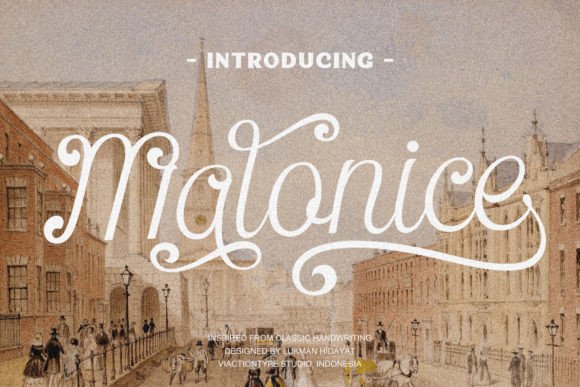
There's a certain magic in a font that feels both timeless and personal. You know the one—it doesn't just sit on a page; it communicates a feeling, a story, a level of care. That's the immediate impression Malonice makes. It’s a script font that draws its soul from the fluidity of classic handwriting, but it does so with a refined, almost architectural precision. The result is a typeface that feels inherently luxurious without being gaudy, and elegant without sacrificing character. For anyone working in design, branding, or content creation, understanding a font like this is about understanding how to add a specific, high-value emotion to your work.
Understanding the Visual Character and Personality of Malonice
At its core, Malonice is a premium font that walks the line between organic warmth and polished sophistication. The letterforms feature gentle, consistent curves and a natural baseline that mimics the flow of a skilled hand, but with none of the unpredictability or sloppiness that can sometimes plague handwritten fonts. The strokes have a balanced weight, offering excellent legibility even at smaller sizes—a critical factor for any practical design asset. It’s this blend of human touch and technical refinement that gives it such a broad appeal.
What truly elevates Malonice beyond a standard script, however, is its extensive toolkit of alternate characters and standard ligatures. These aren't just decorative extras; they are essential features for creating truly authentic and customized typography. When you type a word, the alternates allow you to swap out certain letters for different stylistic variations, preventing repetitive letter shapes and giving your text a unique, hand-lettered feel. The ligatures seamlessly connect specific letter pairs (like 'st', 'fi', 'or'), ensuring smooth, natural joins that are a hallmark of high-quality script fonts. This level of detail is what separates a good font from a great one, offering designers the control needed to craft bespoke headlines, logos, and accents.
Practical Applications: Where Malonice Truly Shines
The versatility of a font like Malonice is one of its strongest assets. It’s not a one-trick pony; its elegant personality adapts to a surprising range of projects. Here’s where it proves most effective:
- Brand Identity and Logo Design: For brands aiming to convey luxury, craftsmanship, or personal service, Malonice is a powerful tool. Think of a boutique hotel logo, a high-end bakery’s wordmark, or the masthead for a premium lifestyle blog. It instantly communicates a sense of exclusivity and attention to detail, helping to build a memorable brand identity.
- Packaging and Editorial Design: On product packaging, especially for artisanal goods, cosmetics, or gourmet foods, this font adds a touch of sophistication that influences perceived quality. In editorial design, it’s perfect for chapter titles, pull quotes, or featured article headers in magazines and books, creating visual hierarchy and drawing the reader’s eye.
- Digital and Social Media: Despite being a script, Malonice performs well in web design for hero text, navigation accents, or call-to-action buttons when used strategically. Its elegance translates beautifully to social media graphics—think Instagram story templates, Pinterest pin titles, or Facebook ad graphics where standing out is key. It helps content feel more curated and professional.
- Wedding and Event Stationery: This is a natural home for a script font of this caliber. From invitations and save-the-dates to place cards and signage, Malonice brings a personal, celebratory, and undeniably elegant touch to any special event.
It’s important to remember, however, that as a display font, its primary strength is in headlines, logos, and short bursts of text. For body copy, you’ll want to pair it with a highly readable serif font or sans serif font to ensure clarity and ease of reading.
Integrating Malonice into Your Workflow: A Practical Guide
Choosing a font is just the first step; using it effectively is what matters. Here’s how to get the most out of Malonice in your projects.
First, always consider context and audience. Malonice is ideal for projects targeting adults who appreciate aesthetics, quality, and tradition. It might not be the best fit for a children’s toy company or a tech startup focused on ultra-modern minimalism. Evaluate if its personality aligns with the message you need to send.
Next, master the art of font pairing. A script font should rarely be used alone for all text. The classic approach is to pair it with a clean, neutral typeface. For a timeless look, combine Malonice with a sturdy serif like Garamond or Baskerville. For a more contemporary feel, a geometric sans serif like Montserrat or Futura provides a beautiful, balanced contrast. The key is to let Malonice be the star of the show—use it for one or two key elements—and let its partner handle the supporting text.
Don’t forget to explore the full character set. Open your design software’s glyphs panel to browse the alternates and ligatures. Experiment with them in your headlines. Swapping in a alternate 'g' or connecting 't' and 'h' with a ligature can make a word look completely custom and intentional. This is how you move from simply using a font to truly designing with it.
Finally, be mindful of practicalities. Since Malonice is a commercial font, ensure you have the correct license for your project, especially if it’s for commercial use, client work, or products for sale. Also, always test its readability at the actual size it will be displayed. Zoom out to 100% and see if it holds up. A beautiful font that no one can read defeats its purpose.
In the end, a typeface like Malonice is more than just a set of letters; it’s a creative font