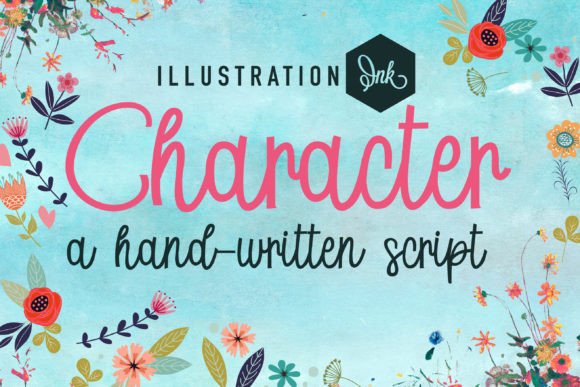
Character: More Than Just a Handwritten Font
In the world of digital design, where precision often reigns supreme, there’s a powerful counter-movement toward authenticity. We crave connection, warmth, and the unmistakable touch of the human hand. This is precisely where a typeface like Character finds its purpose. It’s not merely a collection of letters; it’s a piece of hand-crafted personality, designed to bring a casual, approachable, and distinctly print-like quality to your projects.
At its core, Character is a script font that feels like a familiar friend. Its uppercase letters have a relaxed, organic flow, reminiscent of careful hand-lettering you might find on a vintage shop sign or a thoughtful journal entry. The design avoids overly ornate swashes, favoring instead a clean, readable form that maintains its handwritten charm without sacrificing legibility. This balance is its greatest strength. It feels personal and crafted, yet it’s robust enough for a wide range of practical applications. The included lite version makes it an accessible entry point for creators wanting to test its personality in their own work.
Finding the Right Home for Character's Personality
Understanding a font’s personality is the first step to using it effectively. Character’s casual, print-inspired style makes it a natural fit for projects that aim to feel human, creative, and trustworthy. Think of it as the typographic equivalent of a warm smile and a firm handshake.
For brand identity, particularly for small businesses, solopreneurs, and lifestyle brands, Character can be a cornerstone. Imagine it used for a local bakery’s logo, a yoga studio’s class schedule, or the header on a craftsperson’s packaging design. It immediately communicates approachability and care, helping to build a brand that feels personal and dedicated. It’s a creative font that tells a story of craftsmanship before a single word is read.
In editorial design and publishing, Character shines in contexts where you want to break the monotony of standard body text. Use it for pull quotes, chapter titles in a lifestyle magazine, or section headers in a blog post to add visual interest and guide the reader’s eye. Its style pairs beautifully with a clean sans serif font for body copy, creating a dynamic and engaging font pairing that enhances readability and visual hierarchy.
The digital landscape is another perfect stage. For social media graphics, Character can make quotes, announcements, and promotional posts feel more immediate and relatable. On a website, it can be used strategically for call-to-action buttons, hero section headlines, or team member names to inject personality without compromising the overall professionalism of the web design. It’s a premium font quality that adds significant value to your digital assets.
Practical Guidance for Using Character Effectively
Choosing a font is just the beginning. The real skill lies in implementation. Here’s how to get the most out of Character in your design toolkit.
Evaluate the Project Fit: Before you even download, ask yourself about the project’s voice. Is it formal and corporate? A serif font might be better. Is it sleek and ultra-modern? A geometric sans serif font could be the answer. Character is for projects that need a touch of warmth, creativity, or handcrafted appeal. It’s ideal for invitations, greeting cards, blog headers, product labels, and boutique branding.
Test Font Pairings Relentlessly: No font is an island. Character works best when paired with a simpler, more neutral typeface. A classic sans serif like Open Sans, Lato, or a simple serif like Lora can create a beautiful contrast. The key is to let Character be the star in headlines and short bursts of text, while the paired font handles the heavy lifting of body copy. Always test your pairings at different sizes to ensure harmony.
Mind the Readability: While Character is designed for clarity, its handwritten nature means it’s best used for shorter text elements. Avoid setting long paragraphs in it, as this can strain the reader’s eye. Use it for impact, not for endurance. Its strength is in display settings—logo design, headers, and callouts—where its personality can be fully appreciated.
Understand the Licensing: If you’re using the full version of Character for a client project, a product for sale, or in significant commercial work, ensure you have the appropriate commercial license. The lite version is perfect for personal projects, experimentation, and internal mockups. Respecting font licensing is a mark of professionalism and supports the designers who create these valuable design assets.
Integrating Character into Your Creative Workflow
Think of Character not as a replacement for your current fonts, but as a specialist in your typographic toolkit. It’s the tool you reach for when a project needs to feel less like a corporate entity and more like a trusted advisor, a passionate creator, or a friendly neighbor.
For entrepreneurs and marketers, it can be the secret ingredient in a brand identity that stands out in a sea of sameness. For bloggers and content creators, it adds a layer of personal touch that strengthens audience connection. For designers and crafters, it’s a versatile handwritten font that brings a high-end, custom feel to invitations, planners, and artwork.
The true value of a typeface like Character lies in its ability to influence perception. It can make a brand feel more accessible, a piece of marketing more engaging, and a design more complete. By understanding its personality and applying it with intention, you can leverage this hand-crafted script to create work that doesn’t just look good, but feels genuinely human.