Why Yumoda Is a Top Creative Font for Modern Branding
The Visual Character of a Stylish Monoline Script
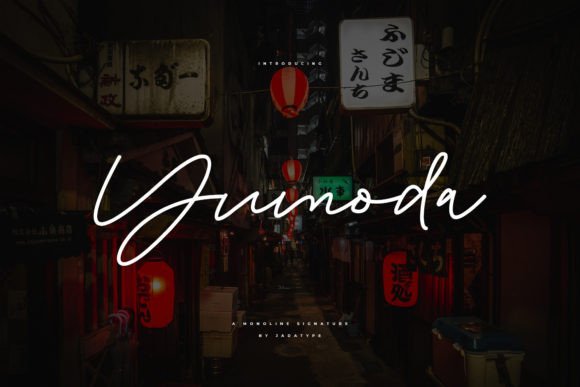
When you first encounter the Yumoda typeface, the immediate impression is one of effortless sophistication. It is classified as a stylish script monoline, but that technical description doesn't quite capture the personality it brings to a page. Unlike heavy, traditional calligraphy or messy grunge scripts, Yumoda offers a smooth, consistent line weight that feels modern and deliberate. The letterforms connect in a fluid, rhythmic flow that mimics high-quality hand-lettering without the inconsistencies that sometimes make script fonts hard to read. This balance is crucial for designers who want the warmth of a handwritten font but require the polish expected in professional branding and commercial font applications.
What sets Yumoda apart in the crowded market of premium font choices is its versatility. It doesn't lean too far into the casual, nor is it overly stiff. This makes it a fantastic display font for headers, logos, and pull quotes. The character set often includes stylistic alternates and ligatures, which allow you to customize the look of the text so that repeated letters don't appear identical, adding to that authentic, human touch. If you are looking for a creative font that bridges the gap between artistic expression and clean readability, this script font is a strong contender.
Real-World Applications: From Social Media to Packaging Design
Understanding where a typeface excels is just as important as how it looks. For content creators and social media managers, Yumoda is a powerhouse. On platforms like Instagram or Pinterest, where visual hierarchy is established in seconds, a distinct display font can stop a user from scrolling. It works exceptionally well for social media graphics, particularly for quotes, announcements, and lifestyle branding. Because it is a monoline script, it renders clearly even at smaller sizes on mobile screens, avoiding the "ink blob" effect that plagues more complex calligraphic fonts.
Beyond the digital screen, this typeface shines in packaging design and editorial design. Imagine a coffee bag, a scented candle label, or a boutique clothing tag. The organic flow of Yumoda suggests care, quality, and a personal touch—attributes that small business owners and entrepreneurs want associated with their products. In editorial layouts, such as magazines or lookbooks, it serves as a beautiful contrast to clean sans serif font body text. It can break up dense blocks of copy and draw the eye to specific headlines or subheadings, creating a dynamic reading experience that feels curated rather than corporate.
Strategic Use in Brand Identity and Logo Design
Choosing a font for your logo design is a high-stakes decision. It defines your visual voice. Yumoda is particularly effective for brands that want to project approachability, creativity, and elegance. Think of wedding photographers, lifestyle bloggers, florists, or artisan bakers. These industries rely on visual storytelling that feels intimate and personal. Using this handwritten font for your primary wordmark can instantly communicate that your brand is human-centric.
However, brand strategy requires nuance. While Yumoda is a beautiful creative font, it should rarely be the workhorse for long-form text. A common mistake in modern typography is using a display font for body copy. The strength of this typeface lies in its impact as a header. For a cohesive brand identity, you need to consider font pairing. Pairing Yumoda with a geometric sans serif font or a clean serif font creates a sophisticated look. The contrast between the fluid script and the structured secondary typeface creates visual interest and ensures your marketing materials are legible and professional.
Practical Guidance for Designers and Creators
When you decide to integrate Yumoda into your design assets, it is worth taking the time to explore the full character map. Many designers purchase a premium font but only use the default letters. With a script font like this, digging into the OpenType features is where the magic happens. Swapping out a standard "t" for a stylistic alternate or connecting an "o" and "n" with a unique ligature can elevate a simple word into a piece of art. This level of customization is what separates amateur design from high-end graphic design.
Readability is another key factor. Because Yumoda is a monoline, it maintains a steady x-height and weight, which aids in legibility compared to high-contrast scripts. Still, spacing matters. When using it for web design or large print headers, you may need to adjust the kerning slightly to ensure the letters breathe. Test the font at the actual size it will be viewed. A script that looks perfect on a 27-inch monitor might lose detail on a mobile screen if the tracking is too tight.
Licensing and Project Fit
Finally, always verify the commercial font licensing. If you are a crafter selling physical goods like t-shirts or mugs, or a publisher using the typeface in a book cover, you need to ensure your license covers that specific usage. Yumoda is a professional-grade design asset, and respecting the licensing ensures you can use it without legal headaches down the road. Evaluate the scope of your project—whether it is a one-off social media campaign or a full rebrand—to select the appropriate license tier.
Ultimately, Yumoda