Oxymoron: The Playful Handwritten Font for Creative Brands
There’s a specific kind of energy that gets lost in corporate design. It’s the human element—the slight imperfections and the organic flow of a pen moving across paper. If you are designing a project that needs to feel approachable, youthful, or whimsical, relying on stiff, geometric sans serifs often creates a disconnect with the audience. This is where Oxymoron enters the conversation. It is a premium font that captures the essence of a handwritten style without sacrificing the consistency required for professional branding. It offers a breath of fresh air for designers and entrepreneurs who want their visuals to feel like a conversation rather than a broadcast.
Visual Characteristics and Personality
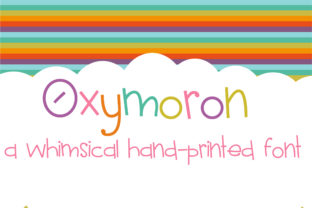
At its core, Oxymoron is a display typeface defined by its loose, organic structure. It mimics the natural pressure and flow of hand-lettering, featuring varied baseline shifts and a casual slant that suggests movement. Unlike some script fonts that can feel overly formal or cursive, this is a print-style handwritten font. The letterforms are distinct, which significantly boosts legibility, even at smaller sizes where other creative fonts might fail. The visual personality of Oxymoron is undeniably youthful. It avoids the scratchy, grunge aesthetic that was popular a decade ago, opting instead for a clean, soft finish. This makes it incredibly versatile; it feels at home in a nursery design just as much as it does on a trendy coffee cup.
One of the defining features of this typeface is its ability to balance whimsy with structure. While it looks hand-drawn, the letter spacing and kerning are handled with professional precision. This is crucial for anyone using the font for logo design or brand identity work. You want the charm of the handwriting, but you need the predictability of a digital asset. Oxymoron delivers exactly that, providing a consistent rhythm that guides the eye naturally from one word to the next.
Where Oxymoron Shines: Applications and Use Cases
Choosing the right font for a project is rarely about finding the "best" font in isolation; it is about finding the best fit for the context. Oxymoron excels in scenarios where the goal is to build an emotional connection with the viewer. Because it mimics the human hand, it instantly lowers the barrier between the brand and the consumer. Here are a few practical applications where this typeface performs exceptionally well:
- Packaging Design: For food, beauty, or artisanal products, Oxymoron adds a "homemade" or "small-batch" feel. It suggests that care was taken in the creation of the product.
- Editorial and Publishing: In magazines or blog headers, it serves as a striking counterpoint to a clean serif font. It works beautifully for pull quotes or section dividers, adding a playful touch to the layout.
- Social Media Graphics: The font has high "thumb-stopping" power. Its irregular shapes break the monotony of standard web-safe fonts often seen in feeds, making it perfect for Instagram stories, quote cards, and promotional banners.
- Web Design: While not suited for body text, it is excellent for landing page hero sections or call-to-action buttons where you want to draw attention without using aggressive, all-caps shouting.
The Strategic Impact on Brand Identity
Typography is a silent ambassador for your brand. When you select a font like Oxymoron, you are making a specific statement about your brand’s personality. You are signaling that your business is creative, approachable, and perhaps a bit unconventional. This is particularly effective for entrepreneurs and small business owners in the lifestyle, wellness, or creative coaching sectors.
Using a handwritten font can significantly influence audience engagement. Readers tend to perceive handwritten text as more personal and honest than digital print. It feels like a note passed between friends rather than a corporate memo. However, this must be managed carefully. Overusing a display font can lead to visual fatigue. The key is to use Oxymoron for headlines, sub-headers, and emphasis, while pairing it with a highly legible sans serif or serif font for the actual body copy. This contrast creates a strong visual hierarchy, drawing the eye to the most important information first.
Practical Guidance for Designers and Creators
Integrating a new asset into your workflow requires a bit of strategy. Before you drop Oxymoron into your next project, consider these practical observations to ensure you get the most out of this design asset.
Evaluating Project Fit
Ask yourself: does the project require authority or approachability? If you are designing a legal firm’s stationery, Oxymoron is likely the wrong choice. But if you are designing a wedding invitation, a bakery menu, or a motivational poster, it is a perfect candidate. The font thrives in environments where "fun" and "authenticity" are the primary goals.
Testing Font Pairings
Font pairing is an art form, but there are reliable formulas. Because Oxymoron has a lot of character and movement, it pairs best with stable, neutral fonts. Try combining it with a geometric sans serif like Montserrat or a clean serif like Lora. The contrast between the rigid structure of the supporting font and the free-flowing nature of Oxymoron creates a sophisticated yet playful balance. Avoid pairing it with other script fonts, as this creates visual competition and confusion.
Readability Considerations
While Oxymoron offers good readability compared to many other handwritten fonts, it is still a display typeface. This means it is not designed for long paragraphs of text. Use it for short, punchy statements. Ensure that your font size is large enough to let the details of the letterforms shine. If you shrink it too small, the organic details will blur, and the text will become difficult to read.
Licensing and Commercial Use
For professionals, licensing is a non-negotiable aspect of modern typography. Always verify that the version of Oxymoron you are purchasing includes a commercial license if you intend to use it for client work, merchandise, or products for sale. Many premium font foundries offer different tiers for desktop, web, and app usage. Investing in the correct license protects your business and supports the type designers who create these tools.
Finally, look for the coordinating styles mentioned in the font family. The prompt mentions "Oxymoronic" as a coordinating script. Having a complementary script allows you to expand your typographic palette without losing cohesion. You can use the main Oxymoron print for bold headlines and the script variation for accents, signatures, or sub-headers. This versatility makes the font family a robust tool in your creative arsenal.
Ultimately, Oxymoron is more than just a whimsical typeface; it is a tool for storytelling. It allows creators to inject personality and warmth into their designs, bridging the gap between digital precision and human touch. Whether you are crafting a brand identity or designing a one-off poster, this handwritten font provides the playful energy needed to make your work memorable.