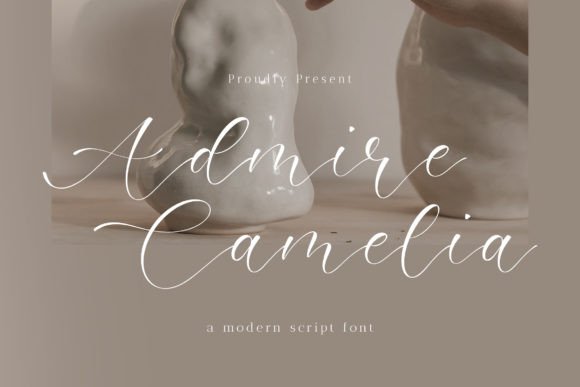
Admire Camelia: A Handwritten Font for Delicate Designs
More Than Just Letters on a Page
Finding a font that genuinely feels like it has a soul can be a challenge. Many script typefaces lean heavily into either casual informality or rigid formality, leaving little room for the nuanced space in between. Admire Camelia occupies that beautiful middle ground. It’s a stylish handwritten script font that doesn’t just spell out words; it whispers them. From the first glance, its character is clear. The letterforms flow with a natural, human rhythm, featuring delicate, feminine curves and a graceful baseline that feels both authentic and refined. This isn't a font that shouts for attention with over-the-top flourishes. Instead, it draws you in with its quiet confidence and elegant personality. Its appeal lies in this versatility—it’s a premium font asset that feels personal without sacrificing a professional edge, making it a standout choice in any designer's toolkit.
What sets this script font apart is its thoughtful construction. The connections between letters are smooth and intuitive, avoiding the awkward joins that can plague other handwritten font options. This careful design ensures that words remain legible, even at smaller sizes or in quick glances, which is critical for everything from web design to packaging design. The overall impression is one of artful simplicity. It suggests a human touch, a story behind the text, and an attention to aesthetic detail that can elevate a project from standard to memorable. For anyone working within modern typography, having a font like Admire Camelia means having a tool that can instantly inject warmth, creativity, and a distinct point of view into a design.
Where This Creative Font Truly Shines
The true test of any display font is its application. Where does Admire Camelia not just work, but excel? Its strengths are most apparent in projects where personality and emotional connection are paramount. For brand identity work, particularly for boutique businesses, lifestyle brands, wellness studios, or artisanal products, this font can become a cornerstone of the visual language. Imagine it on a logo for a floral shop, a skincare line, or a bespoke stationery brand. It communicates care, quality, and a personalized approach before a customer even reads the tagline. This makes it a powerful asset for logo design and branding collateral that aims to build a recognizable and relatable presence.
Beyond logos, its utility extends across a wide range of design assets. In editorial design, it’s perfect for magazine headlines, pull quotes, or chapter titles that need a touch of elegance. For social media graphics, it can stop the scroll with its distinctive style, ideal for quotes, announcements, or story highlights that require a personal feel. Think of wedding invitations, greeting cards, and event programs—these are projects where Admire Camelia’s delicate energy feels right at home, adding a bespoke quality that generic fonts cannot match. It’s also a strong candidate for product packaging, especially in the food, beauty, or craft sectors, where it can help tell the product’s story directly on the label.
Practical Guidance for Using a Handwritten Typeface
Choosing a font is a strategic decision, not just an aesthetic one. When considering Admire Camelia for a project, start by evaluating the fit. Does the project’s tone align with the font’s feminine and elegant personality? It’s a superb creative font for projects targeting a predominantly female audience or those in creative, lifestyle, or luxury-adjacent markets. However, its refined nature might feel out of place for a corporate finance report or a rugged outdoor brand. Context is everything. A good practice is to mock up a key element—like a headline or a logo—using the font to see if it feels authentic to the project’s core message.
Next, consider font pairing. A script font like Admire Camelia rarely works well in isolation for body text. Its strength is in display roles. The key is to pair it with a complementary serif font or sans serif font that provides stability and readability. A clean, geometric sans serif can create a modern, balanced contrast, while a classic serif can enhance the elegance and sophistication. For instance, using Admire Camelia for a main headline and a simple sans serif for subheadings and body copy creates a clear visual hierarchy that guides the reader’s eye effectively. Always test pairings in context to ensure they work together harmoniously without competing for attention.
Before finalizing your choice, review the font package thoroughly. Check for the availability of stylistic alternates, ligatures, and swashes. These additional glyphs are what allow you to customize the look and feel, adding unique flourishes to specific letters for a truly custom result. Also, consider readability considerations. While Admire Camelia is designed for clarity, always test it at the intended size and on the intended medium. A script that looks beautiful at 30pt on a poster might become a tangled line at 12pt on a mobile screen. Finally, ensure you understand the commercial font licensing. Verify that the license covers your intended use, whether it’s for a client’s commercial product, digital goods, or physical merchandise, to avoid any legal complications down the line.
Ultimately, a typeface like Admire Camelia is more than a collection of glyphs; it’s a design partner. Its value lies in its ability to convey a specific mood and enhance the narrative of your work. By thoughtfully integrating it into your projects—where its delicate, handwritten charm can resonate—you can create designs that feel more human, more engaging, and distinctly memorable. It’s an asset that proves how a single, well-chosen font can significantly influence the perception and professionalism of your creative output.